Thursday, March 24, 2016

Silverado Senior Living SPOTLIGHT Story - Love Lives Here


Love Lives Here
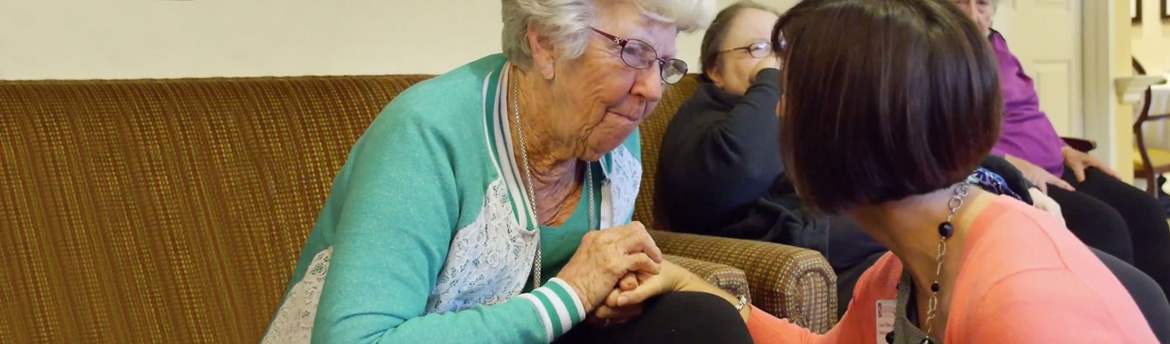
Love Lives Here is a new documentary short that explores the innovative way Silverado gives life to residents. Produced by retired Rutgers University professor Dr. Cathy Greenblat and award-winning Australian filmmaker Corinne Maunder, this film is the third installment in Fire Films' documentary series Side by Side: Love and Joy in Dementia Care.
Detailing how Silverado gives life to residents through our philosophy of love and recognizing the value of the human spirit, Love Lives Here was shot at four different Silverado communities in California, and features interviews with associates, residents, family members and dementia-care experts as well as photographs and video footage of the daily life at Silverado.
 “Silverado has a unique approach that sees them getting people to do things that the top neurologists in the world said was impossible, which presented an ideal opportunity to create a thought provoking piece about dementia care,” says Dr. Greenblat, who has been photographing at Silverado communities since 2001. Her books Alive with Alzheimer’s (2004) and Love, Loss and Laughter (2012) both feature numerous photos from Silverado communities. Galleries in North America, Europe, Asia, Australia and the Middle East as well as the World Health Organization, the United Nations and the US National Academy of Sciences have all exhibited Dr. Greenblat’s photographs.
Ms. Maunder, who produced and directed the film, was initially inspired to explore Alzheimer’s care in films by her grandmother’s diagnosis of Alzheimer’s. Since 2013 she has produced over two dozen short films and educational videos about dementia, with more currently in production.
Dr. Greenblat says, “The vision for Side by Side is to create a multimedia resource for individuals and organizations to learn about better practice person-centered dementia care.” The first two films in the series, Finding the Why (Starrett Lodge, Uniting, Australia) and It Takes a Community (Arcare Helensvale, Australia), have informed and inspired countless viewers and have been used in universities, professional forums and care facilities around the world.
“The beautiful thing about this series of films is that the creative process has been very organic,” says Ms. Maunder. “There are no scripts, no marketing departments, no one telling me what messages to push. I’m free to capture and present everything just as I see it, which makes it very authentic. These are real stories about real people.”
Visit us online @ www.silveradocare.com 

Tuesday, March 15, 2016

Tips to Help Avoid Medication Mistakes


Ninety-one-year-old Fred lives in an independent retirement community and is usually skilled at managing all of his many medications. After a bout with congestive heart failure, he was prescribed a diuretic to help eliminate fluid from his system. It worked and he got better. So he quit taking the medication. It was one less pill he had to remember to take. He viewed the prescription as a temporary medication when the doctor actually intended for him to keep taking the prescription. Soon the fluid began to build up again and Fred was back in the hospital.
Nearly 20 percent of seniors who are taking five or more prescription medications surveyed by Home Instead, Inc., franchisor of the Home Instead Senior Care® network, reported challenges in managing their medication regimen including understanding directions for taking the medications.
Such medication management uncertainty could put seniors at higher risk for a medical issue or emergency due to incorrect dosage or adverse medication interactions. And that can lead to potentially devastating consequences. Each year, there are nearly 100,000 emergency hospitalizations for adverse drug events in U.S. adults aged 65 years or older, according to the Centers for Disease Control and Prevention.
Following, from Home Instead Senior Care and Dr. Jane Potter, geriatrician and director of the Home Instead Center for Successful Aging at the University of Nebraska Medical Center, are suggested ways to help minimize the risk of medication mistakes.

Get a pill organization system or service

Approximately 50 percent of patients do not take their prescriptions as prescribed, according to the 2011 study, “Medication Adherence: WHO Cares?”. That’s why a pill organizer can be such an important tool.
Check out Simple Meds℠ to learn more about the benefits of an organized system for medication management. Simple Meds pharmacists dispense prescriptions, over-the-counter medications and vitamins in simple, multi-dose packets. The medications will be sorted and conveniently organized into single serving packets, labeled with the date and time they should be taken as prescribed by the senior’s doctor.

Make one doctor the gatekeeper to manage medications

It’s typical for an older adult to have multiple doctors, which is potentially dangerous. Dr. Potter suggests that your senior designate a primary doctor as the gatekeeper. Most people assume that doctors talk to one another, but you can’t assume that’s the case. They may not be aware of everyone involved in your older adult’s care. It’s best to keep a list of all providers and who is managing what, and update the list at least annually or whenever a change in medications is made.
“Bring into doctor appointments the actual medication bottles along with bottles of over the counter drugs your senior is taking so the doctor can cross check those each time,” Dr. Potter recommends. Medication tracker worksheets, where you can help your loved one record all the necessary information, can help as well.

Know why your loved one is taking the medication

What specific condition(s) or symptom(s) was the medication prescribed to help alleviate? Make sure your senior can read and understand the medication’s instructions. And verify with the pharmacist that the medication being given is what the doctor prescribed. Double check with the pharmacist to make sure the medication won’t interact with any other prescriptions being administered. Make sure you and your senior are aware of all potential side effects.

Call the doctor about any changes in how your senior is thinking, feeling or looking

Many people have a sense when they feel different, especially after a change in their medication. But your senior could also develop a reaction after years on the same medication. Be sure to bring these issues to the attention of a health care provider.

Keep regularly scheduled appointments and an open dialogue with your loved one’s health care provider

Encourage your senior loved one to keep a regularly scheduled appointments and maintain open communication with the doctor to help avert medication problems. Consider writing down questions in advance so you and your loved one remember everything you intended to discuss during an appointment.

If your senior is having trouble paying for medications, talk with the doctor

One of the biggest deterrents to medication adherence is cost. If an older adult is having trouble paying for a medication, discuss this with the doctor and pharmacist. Generic options can be cheaper and some pharmaceutical companies offer discounts.

Tell your senior loved one’s health care provider if you suspect he/she is depressed

Depression might make sticking to a medication regimen more difficult. Furthermore, some medications can contribute to depression. Be sure to let your doctor know if your senior loved one seems depressed.

Discuss any problems an older adult may have in taking a medication, such as the inability to swallow or difficulty opening a pill bottle

Solutions exist for some medication challenges. For instance, a liquid can be prescribed as an alternative to pills for some medicines. What’s more, pharmacists are required to provide easy-open bottles that can help individuals with arthritis. Discuss these options with your senior’s pharmacist.

Tell a health care provider if you suspect a loved one is forgetting to take a medication

It’s easy to become confused about the medications that have been prescribed, when they should be taken and how often. Confer with your senior’s health care provider about the appropriate level of medication assistance for your loved one.

Consider a caregiver

Help a senior assess the risk of medication mismanagement or side effects by going to the Let’s Talk About Rx℠ Solutions Guide. If you’re feeling overwhelmed and unable to manage medications—or you’re a family caregiver worried about an older adult’s ability to manage medications—consider hiring a caregiver companion. Contact your local Home Instead Senior Care office to learn more.

Tuesday, March 1, 2016

IN THE SPOTLIGHT ~ Mobile Dentistry of Arizona

We are pleased to announce our newest advertiser
Mobile Dentistry of Arizona
in our Phoenix SPOTLIGHT Senior Services & Living Options


Mobile Dentistry of Arizona provides comprehensive dental services with a personal touch! This practice caters to individuals who find it problematic to leave their home due to mobility challenges, or find it hard to take time off of work. Bringing dental care directly to our patients also allows them to age in place. We know from experience that many people who have difficulty obtaining dental care are often faced with tooth decay and gum disease. This is a national concern and compromises the entire health of an individual. 

Our staff includes professionals that are the very best in their field.  Our practitioners are highly skilled in caring for patients with very complex medical histories as well as behavioral and cognitive concerns.  We pride ourselves in providing comprehensive care both in our mobile unit as well as at your bedside. 


Our fully equipped mobile dental office is complete with a lift for mobile scooters, wheel chairs, and ambulatory devices. Our staff consists of three dentists, six assistants, two hygienists and a fully staffed business office. All are caring and experienced, providing that special touch with the aging population, and anyone who needs that extra personal assistance.

Visit us online @ www.mobiledentistryofaz.com 

Monday, February 22, 2016

IN THE SPOTLIGHT ~ All Options Funeral Home

We are please to announce our newest advertiser
All Options Funeral Home 


All Options Funeral Home is a full service funeral home, with affordable prices.
Family owned and operated, located in Tempe.


Our staff is committed to provide personalized service with respect and dignity.  We will preset all options for traditional and non-traditional funeral services at an affordable price, without pressure sales.  Phones are answered 24 hours a day and everyday, we welcome you to our location, by appointment.  We are here to fully assist.

We are fully Licensed to take care of your loved ones. Whether you decide to do a public viewing, to an immediate family viewing

We have a chapel for intimate celebration of life services at our location. We also have relationships with other venues for larger services, and we can work with your church, place of worship or other location for types of services.

Tuesday, February 16, 2016

IN THE SPOTLIGHT ~ Quail Run Behavioral Health

We are pleased to announce our newest advertiser
Quail Run Behavioral Health
in Phoenix SPOTLIGHT Senior Services & Living Options


Quail Run offers behavioral health treatment services for older adults. With service excellence as a priority, our team of experts provides programs that focus on high-quality clinical care.

Inpatient Older Adult Program
Our Sonoran program for older adults focuses on meeting the needs for those ages 55 and older that require intensive behavioral health care. The holistic approach is intended to address a patient’s mental health and medical needs on an individual basis. Our interdisciplinary treatment team includes a psychiatrist, medical providers, nurses, therapists, discharge planners, recreation therapists and behavioral health technicians who are experts in understanding the challenges that may come with aging.

Treatment services can include:
• Assessment
• Individual and family therapeutic intervention
• Medication evaluation and treatment
• Psychoeducational interventions
• Therapeutic process groups
• Recreational therapy
• Medical treatment
• Nutritional care
• Discharge planning

Outpatient Programs
The emphasis on emotional regulation, relational dynamics and building resiliency provides the foundation for insight and behavioral change.
• Partial Hospitalization Program (PHP)
For individuals who need intensive psychiatric and therapy services on an outpatient basis. Individuals return to their home environment each day after programming is completed. Individuals may enroll directly from the community or as part of our Next Step Program.
• Intensive Outpatient Program (IOP)
For patients who need frequent treatment services to continue their recovery. The ongoing structure of group therapy can help with their progress toward wellness. Individuals participate three days a week and clients may enroll directly from the community or they may transition from the PHP or inpatient care.

For more information, call 602-455-5694, 24 hours a day, seven days a week.


Quail Run Behavioral Health
2545 W. Quail Ave. 
Phoenix, AZ 85027

Monday, February 1, 2016

IN THE SPOTLIGHT ~ Climatec

We are pleased to announce our newest advertiser 
Climatec
in our Phoenix SPOTLIGHT Senior Services &
Living Options Guide


Climatec’s top priority is the safety and security of each resident in your care. When it comes to their solutions for Senior Living, Assisted Living, Skilled Nursing  and Memory Care environments, they strive to be their customers’ first-choice through a focus on operational excellence and world-class service. Their dedication to delivering the best innovations is demonstrated through a suite of products that are second to none. Climatec values the importance of providing families and caregivers, total peace of mind, and looks forward partnering with you in providing a safe, secure and positive environment.

Product Suite

·       Resident wander

·       Secure access

·       Nurse/emergency call systems

·       Fire Protection

·       Video and Access Control

Visit us online @ www.Climatec.com 

Monday, January 18, 2016

Home Instead Senior Care Addresses: "How To Deal with Family Conflict Caused by Alzheimer's"


How to Deal with Family Conflict Caused by Alzheimer’s


Only when families work together as a team can their loved ones with Alzheimer's receive the best love and care possible.   

Shortly after her father passed away, Valerie's mother was diagnosed with Alzheimer's disease.

“When it became apparent that there was something wrong with my mother, my brother told me, ‘I’m sorry, but I’m done with her.’
I don’t know what happened between them, but he was true to his word. He was really scarce with his visits. I guess since I am her caregiver, I’m out too. He has no contact with me. I am really alone in this endeavor to take care of Mom. Alzheimer’s has broken up my family.”

Sadly, an ill loved one is the number one trigger for family conflict, according to a study conducted by the Home Instead Senior Care® network. Coping with the reality of a loved one’s Alzheimer’s not only has its emotional difficulties, but logistical ones as well, especially in terms of decision-making and bearing the responsibility of caregiving. Despite these challenges, the following tips may help you unite your family around your loved one with Alzheimer’s when that person needs family support the most.


·         Communicate Regularly. Don’t allow weeks to turn into months and years of not communicating with family members you feel should take a vested interest in your parents’ condition and care. If you’ve fallen out of touch with a member of your family, reach out through a phone call, email, card or letter.
·         Empathize. Difficult situations affect everyone differently, so try to understand your sibling’s point of view before getting angry or upset. Approaching the issue this way will help you suggest an appropriate solution. Maybe your brother can’t emotionally deal with Mom “losing her mind.” If that’s the case, maybe he can help you by contributing financially to her care instead. Empathy was one main factor that helped keep the Hamilton sisters united. The stress of their mother’s illness affected every person in the family differently, but as you’ll learn from their family’s story, they persevered through the challenges to provide the loving care they felt their mother deserved.
·         Ask for Help. If you feel over-burdened by the responsibility of caregiving, inform the rest of your family (without complaining or blaming others). Your sibling(s) may assume you’re doing just fine handling everything on your own unless you tell them what challenges you’re facing and specific ways they can help. As the maxim goes, “a burden shared is a burden halved.”
·         Make Decisions Together. Even if you serve as the primary caregiver of your parents, involve your sibling(s) when you need to make a major care decision. Maybe you feel Dad’s Alzheimer’s has progressed to a point where he needs additional assistance, and you’re looking into hiring a professional in-home caregiver for him. Talk through the pros, cons, financial considerations and possible alternatives with your siblings before you make a decision. Taking their thoughts and opinions into account will help to eliminate any hard feelings, grudges or resentments.
·         Leave Childhood Rivalries Behind. Easier said than done, of course, but try to approach the issue as the adult you are now, not as the younger person your siblings may still see you as. Stepping back and realizing how unresolved issues from long ago influence your present relationships may put a helpful new perspective on your current situation.
·         Enlist the Help of a Mediator. Sometimes family issues become too complicated or emotionally charged to solve on your own. A third-party resource, particularly a professional such as a counselor, mediator or even a doctor or geriatric care manager, can provide an impartial voice of reason.


Only when families work together as a team can their loved ones with Alzheimer’s receive the best love and care possible. Remember that regardless of your past history or current situation, all relationships are a work-in-progress. Envisioning how efforts to make amends will ultimately benefit everyone and can help steer you and your family members on a path toward reconciliation.
For additional support managing family relationships and resolving family conflict, explore the resources in our 50-50 Rule® program.