Friday, October 10, 2014

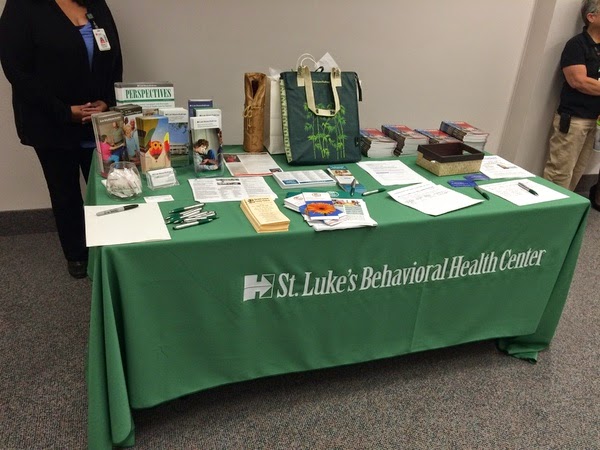
October Scottsdale / Phoenix SPOTLIGHT Event Recap


Our Scottsdale / Phoenix SPOTLIGHT Event hosted by St. Luke's Behavioral Health was absolutely wonderful! Thank you all for coming and for your continual support.

Special Thanks to  Luis Gonzalez and Jan Berry for their warm welcome and for all their efforts to host this event! The meal was delicious. 

We look forward to seeing everyone next week for our October 14th event at Desert Cove Nursing Center and/or on October 15th at Silverado Peoria Memory Care Community.


Thursday, October 9, 2014

7 Tips to Reduce Stress of Incontinence Caregiving


As people age, their ability to control bladder and bowel functions can decrease for a variety of reasons. Sometimes, the reason is reversible (such as a urinary tract infection). Other times, the situation can’t be changed. If you’re providing care for a loved one with incontinence, you can take steps to minimize stress on both of you. These seven tips may help you cope.
1. Check with your loved one’s health care provider. For all new cases of bladder or bowel incontinence, get a physical examination to see if the cause is treatable. Even though your loved one may not have symptoms other than incontinence, there could be an underlying medical condition causing the problem. If medical care resolves the incontinence issue, go back to your health care provider if it crops up again.

2. Always be prepared. Pack a small tote bag with supplies such as incontinence briefs or pads, wipes and even a change of clothes in case an accident happens when you’re out and about together. Don’t allow your loved one to become a hermit because of incontinence issues.

3. Wear clothes that are easy to get on and off (or not).Slacks with an elastic waistband can be pulled down quickly, enabling your loved one to get on the toilet faster and possibly avoid an accident. And if you do have to help your loved one with cleanup, easy-off garments make it simpler for you to undress and re-dress them. On the other hand, people with dementia sometimes remove their clothes at inappropriate times and places. In that situation, you obviously would not want to dress your loved one in clothing that’s easy to remove.

4. Watch your loved one’s diet. Some foods make both bladder and bowel incontinence worse. Avoid consuming caffeine (coffee, tea, some sodas), chocolate, spicy foods and a lot of fresh or dried fruit.

5. Be empathetic. Losing control of bodily functions ranks among the most stressful health issues, so approach the situation with patience and tact to ease your loved one’s anxiety. You may find it helps reduce your own stress level as well.

6. Adopt a matter-of-fact approach. Care professionals use this technique to overcome a client’s shyness or embarrassment, and you can too. Use reassurance and a straightforward manner: “Oh, that’s too bad you had an accident, but don’t worry. It happens to a lot of people. Let me help you get cleaned up and into some dry, comfortable clothes.” If you find incontinence caregiving uncomfortable, you may have to fake this matter-of-fact attitude at first, and that’s OK. Pretty soon, you’ll find it comes very naturally.

7. Accept help. Let’s face it: many caregivers who are willing to provide all kinds of help to a loved one draw the line when it comes to dealing with incontinence. It’s perfectly all right for you to set this caregiving boundary. But your loved one still needs to maintain personal hygiene, so don’t hesitate to call for reinforcements. 

Search out non-medical personal care services, such as those provided by the Home Instead Senior Care®network. Home Instead® CAREGiversSM trained in personal care can help your loved one in a dignified and professional way.
Incontinence can be a challenging issue for even the most seasoned caregiver, and it’s a particularly common issue for seniors with Alzheimer’s disease or other dementias. For more tips specific to incontinence and memory care, visit the Dementia Support Network.


Friday, September 26, 2014

The Positive Impact Of Owning A Wheelchair Van


The Positive Impact of Owning a Wheelchair Van

Dealing with a disability can be tough for anyone of any age. When someone loses the ability to walk due to their disability, that person may feel like they have lost a great deal of their independence and freedom. Many disabled individuals have to regularly rely on the care of others, especially for transportation. Getting to doctor appointments and running errands becomes a day long task that often leaves the disabled individual exhausted, especially if the vehicle being used for transportation purposes is not designed for those who are in wheelchairs. One way that disabled individuals can regain some of the precious freedom they feel they have lost is through the use of a wheelchair van.
Owning a wheelchair van is a life changing event. These vans make travelling much easier and enjoyable, while also enabling the disabled individual to load themselves into the vehicle without the help of another. This alone can boost the spirits of the individual and make them feel like a normal person again. These handicap vans are fitted with special technology such as wheelchair lifts or ramps that allow a person in a wheelchair to get into the vehicle. The handicap accessible vans are modified so that there is additional headspace for the safety of the person in the wheelchair. There is also safety equipment installed on the inside of the vehicle to keep the individual in place during travel.
If you are looking to help restore a sense of independence to your life or in the life of someone you love who has a disability, then you need to look into getting awheelchair accessible van today. Ability Center has a wide selection of mobility products and handicap vans to meet the individual needs of you and your family. Aside from having a wide selection of vans, they also have wheelchairs and scooters that you can purchase as well.
To learn more, visit us at www.AbiltiyCenter.com 

Senior Emergency Kit


Senior Emergency Kit


SEKit


The Home Instead Senior Care® network's Senior Emergency KitSM can help ensure that family caregivers like you have fast and easy access to important information about loved ones in case of an emergency call.
This resource is designed to help family caregivers gather details about a senior's doctors, pharmacy and insurance company, medications and dosages, as well as allergies, power of attorney and other important information.
This toolkit will provide you with all the important information you need in a centrally located file so you are ready for a crisis, day or night.

3 Tips For Helping A Parent Who May Not Want Help


Many adult children tread lightly when it comes to the health of an aging loved one, especially when it could threaten independence. And, sadly, it often takes an incident of some sort before families feel that “enough is enough” and have the confidence to face a health issue head-on. So what can families do for a loved one when it becomes apparent that their health is declining and/or their safety is at risk? With the help of AARP, we have a few strategies that families can try to approach these sensitive situations as delicately as possible. According to the AARP, here are several strategies children can use that can ensure a parent’s safety but also appeal to his or her pride:
  1. Empowerment. It is crucial for an adult child to show his or her parent that they are allies, not adversaries, and that the child fully supports the parent’s desire to live independently as long as possible. But the child should suggest that accepting help would allow the parent to do what he or she wants and maintain self-sufficiency. If the parent would receive help mowing the lawn, then it could conserve energy for trimming hedges, whacking weeds or pursuing another interest. With the boost of helping hands, we all achieve more and go further. We become more, not less.
  2. Enablers of Growth. Emphasize the giving that is inherent in receiving: Many adult children who take care of their parents mature personally and spiritually from the experience. When aging parents allow their kids to be their caregivers, they are intentionally giving them that opportunity to learn and grow. In contrast, aging parents who protest that they don’t want to inconvenience their kids and refuse to allow them to be helpful actually deprive their children of this growth experience. The child can make this point by explaining how much it would mean to him or her if the parent would receive help. The kid could further stress how mom or dad took care of their parents and how it gave them pride to do the right thing.
  3. Role Model Reminder. Receiving care graciously is equivalent to getting old gracefully: As youngters, adult children learned from observing their parents about how to prepare for and handle life’s challenges. As middle-aged people, those same children learn from watching their parents about handling the losses at the end of life. Children must make it clear they are watching their parents and care. If parents can accept this care, it would provide children with a model of graciousness despite obvious physical and mental issues. If the parent persists in refusing help, it only teached the chid to fight old age rather than embracing it. A parent’s acceptance of help would help his or her child in the future.
These situations are not easy for anyone involved, but a plan is always good to have. Consider your loved one’s values and wishes and, whenever possible, have open conversations about these things. In that way, once a situation arises, you are all better informed and feel more confident in finding a solution that honors your loved one.
Visit us online for more information at www.BrightStarCare.com 

Community Resources for Elder Care

COMMUNITY RESOURCES FOR ELDER CARE

For older adults who are looking to maintain independence, there are a growing number of private and public organizations that offer home and community-based services. Many of these services can help solve long-term care issues and ease the stress of the caregiver. According to AARP, these services, which include occasional household help to 24/7 in-home care, are provided by nurses, trained aides and volunteers. Here is some information to get you started, thanks to AARP:
Elder Care Locator
Get help finding local services in your loved one’s community.The locator provides area-specific recommendations for stuff like home care, meal plans, transportation options and more. Use their helpful website.
Companionship Services
Local agencies on aging often provide affordable services where older adults are matched with a companion who checks in on a regular basis – both in person and over the phone – to provide home supervision, reassurance and friendly, social interaction. This can relieve guilt from caregivers who would like to help more often. Contact your state’s agency on aging for more information.
General Housekeeping and Upkeep
For those unable to handle laundry, cooking, errands and shopping, homemakers and home-care aides can come in handy. They can also assist with bathing and dressing. These providers, including ones that help with home repair services, usually charge an hourly rate. Check your state’s agency on aging or local senior center to find these services.
Meal Programs
Making meals daily can become a huge stress on older adults. A meal delivery service may be needed, or some facilities can offer group meals. Call your local senior center for more information.
Senior Centers
These offer older adults the opportunity to gather with their peers in a casual setting and participate in a variety of activities and programs. These centers provide an engaging environment for our older loved ones to age successfully and with fulfillment. Exercise classes, day trips, excursions and even continuing education classes are some of the centers’ features. Visit the National Council on Aging’s website.
Transportation
There will come a time for older adults when alternative transportation options are necessary. There are numerous options in most communities, such as taxis, hired car services, volunteer drivers, Dial-a-Ride, ride sharing, public transportation and more.
For more information on senior resources in your community, contact a local BrightStar Care.

Wednesday, September 10, 2014

How To Cope With 3 Common Caregiving Frustrations

How to Cope with 3 Common Caregiver Frustrations


Caring for your parents or another loved one can offer rewards beyond what you can imagine. But that doesn’t mean your caregiving life remains free from frustrations that range from large to small. You may at times find yourself feeling irritated with your loved one or resentful of family members who refuse to help you. If you have these feelings, you’re not alone. The following quotes are from real family caregivers in the Alzheimer’s community. Hear what they have to say about their caregiving frustrations, and try some of the suggested solutions.
UNHELPFUL FAMILY MEMBERS
“I have 2 siblings who live in the area and two out of state. My mother has lived with me going on 3 years. Not once has either local sibling offered to take mom out, take her to supper, or take her for the weekend. They begrudgingly take her when I ask months in advance.”
“I have three other siblings that do not care to help with her care. I work full time and have a daughter graduating high school this year. I try to show my daughter patience and care in taking care of mom but it isn't easy.”
Solutions to try:

FREQUENT CRYING AND MOOD CHANGES
“My mom has been at my house for 3 weeks now and at times has forgotten who I was and she cries most of the day. How do I cope with the daily changing of her personality without losing my mind?”
“Mom also has been crying a lot at night lately. She says she misses her mother and a baby she lost (at 3 months old) back in the 60's. I don't know how to handle her when this happens. Mom cried for 40 minutes the other night.”
Solutions to try:

HOW DO I GET MOM TO SHOWER?
“I have the challenge of getting my mom to shower. She is wheelchair bound but can transfer to a chair we have in the shower. She wants only sponge baths, and it is the topic of disagreement often. She has some minor dementia. Help!”
“What do I find most frustrating? So many situations to choose from...let's see. I think it is the showering/bathing. She gives us lip service EVERY TIME!!! She says, ‘I’m not dirty,’ ‘I just did this today,’ or ‘I know what u r up to?’ And she wants to wear her depends and slippers in. It is such a struggle.”
Solutions to try:
Visit us online to give your best tips and tricks for helping to overcome these common caregiving issues? Please share your solutions in the comments section at